Perched on the edge of a steep gorge, this dramatically located town is not for the faint hearted. Set among the mountains of Serranía de Ronda, it’s 750 metres above sea level, making it far cooler than the coast.
History
Nineteenth century industrialisation meant young people made huge travels through Europe in search of natural beauty. These trips inspired works of Northern European artists, known as ‘romantic travellers,’ including Ernest Hemmingway.
Many were drawn to southern Spain and Ronda was a particular favourite. Their poetry and illustrations led to the creation of idealised landscapes and romantic Andalusian clichés such as bullfighting, banditry and flamenco.
I’ve always been rather negative about this romanticisation but Ronda rightly claims that it has taught us to appreciate the town’s heritage and traditions.


Parque Alameda del Tajo
This leafy little park is right next to the steep drop and has breath-taking clifftop views.


Plaza de Toros
Ronda’s famous bullring is more than 200 years old and is supposedly the largest, and most dangerous, of its kind. The city claims to be home of bullfighting and is the birthplace of Spain’s most legendary fighters.


Puente Nuevo
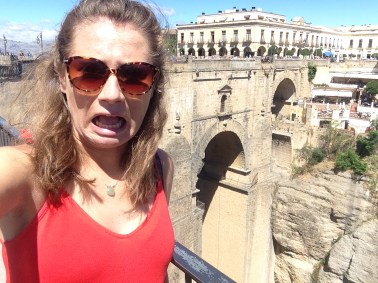
The primary tourist attraction of Ronda, this bridge links the old town (La Ciudad) with the new. It is 120 metres deep; built right down into the El Tajo gorge.

If you are brave enough, you can walk down a dirt path to a precarious spot which has spectacular views of the bridge. Those feeling even more adventurous can walk all the way into the gorge itself.
Despite its rich history and stunning setting, Ronda lacked an authentic Andalusian atmosphere. It makes for a great day trip (buses run daily from Málaga and Sevilla) – but you don’t need long to soak up the picturesque scenery.

In honest truth, I couldn’t cope with more than a few hours as my vertigo was taking its toll!
 La Buena Vida
1 thought on “Ronda”