Granada blew me away with its beauty. It’s a hard city to describe but I think the Lonely Planet Guide puts it nicely:
“Granada is the more complicated cousin of sunny, exuberant Seville. Humming with a feisty cosmopolitanism and awash with… contradictions and myths. Elegant yet edgy, grandiose but gritty… 21st Century Granada is anything but straightforward.”
Alhambra
Attracting millions of visitors each year, this place really does live up to its expectations. As Granada was the last stronghold of the Moors, the Alhambra became a palace, fortress and mini-city for Muslims. The palace towers on the hilltop above the city. Heavily restored to its former glory, it is truly magnificent.
Palacios Nazaríes
The central palace complex and the heart of the Alhambra, this is Islamic architecture at its finest. The numerous rooms and patios are filled with multi-coloured tiles, carved columns and clever calligraphy. The intricacy is quite dizzying.


Salón de los Embajadores – Carved wooden ceilings are seen best here where 8000 cedar pieces are used to represent the seven heavens.
Patio de los Leones – ‘Courtyard of the Lions’ is mesmerising. With its marble sculpted lions and embellished arches, this was Islam’s vision of paradise.


Generalife
These glorious gardens are found behind the Alhambra complex. With beautiful courtyards, fountains and stunning plant arrangements, you cannot leave the palace without paying the grounds a visit.


Albayzín
On the hill opposite the Alhambra is the city’s old Muslim quarter. Getting lost is inevitable here; the maze of cobbled streets is impossible to navigate.

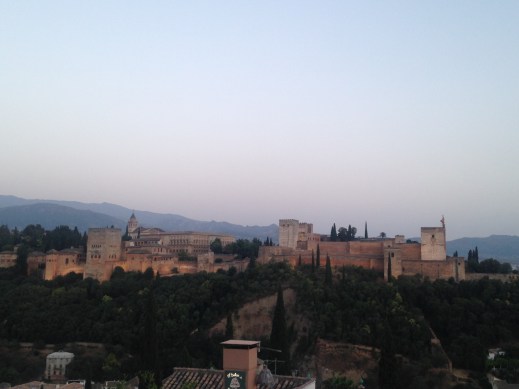
You cannot miss the viewpoint from Mirador San Nicolás – which looks out onto the Alhambra. It’s quite a climb but the views are truly magical; the Sierra Nevada mountains rising behind the palace complex. The atmosphere up here is also special – all sorts venture to this lookout including tourists, quirky students and flamenco singing buskers.
 Sacromonte
Above the Albayzín is Sacromonte: the gitano (Roman gypsy) neighbourhood. The Sacromonte caves are the local’s homes, dug out of the hillside. They are explained well at the museum Museo Cuevas del Sacromonte. Here you can visit mock homes with folk art such as ceramics and basket weaving and learn about local flamenco traditions. The museum also informs visitors about the surrounding environment.


Calle Calderería Nueva
This is where the city’s Arab influence is strongest; a street lined with exotic teterias (teahouses) and Moroccan style merchandise.
Free tapas
Granada’s bars are generous enough to give one free tapas with every drink you order. This makes it an excellent destination for cheap backpackers who can fill up on free food.

Lonely Planet is right: the city’s atmosphere is hard to pin down. Moody and mysterious yet at the same time wonderfully vibrant, Granada is a truly enchanting place.
 La Buena Vida
1 thought on “Granada”