Amongst the endless olive groves, this big but eerily empty city feels rather cut off from the rest of the region.
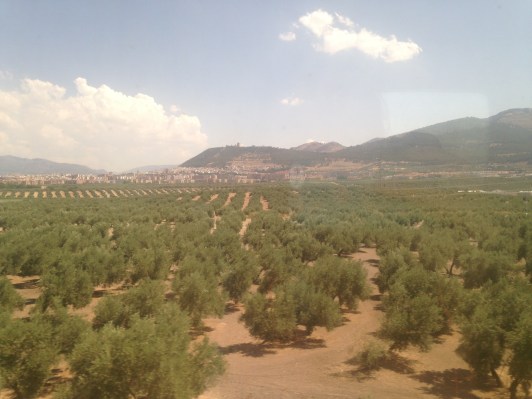
Jaén calls itself ‘The world’s capital of olive oil’ as the province produces one sixth of the world’s supply. An economic dependence on olive oil makes the city poorer and rather lifeless compared to other Andalusian cities. It lacked the typically warm, vibrant atmosphere of the south.


You can’t miss Catedral de la Asunción in Jaén’s central square; a grotesquely extravagant cathedral which dwarfs the rest of the city.


Palacio de Villardompardo
Jaén has an excellent museum which includes beautifully preserved Arab Baths and an exhibition about the city’s pre-industrial rural life. It’s extensive collection of photos and artefacts show how tough a country existence really was. There is a great viewpoint on the top floor of the museum overlooking the city.


El Pato Rojo
Strangely enough, the best seafood I had was in this landlocked city. El Pato Rojo (The Red Duck) is a wonderfully cramped tapas bar with a great atmosphere. Its seafood tapas are sublime and cost next to nothing.
Castillo de Santa Catalina
High above the city stands the majestic old castle of Santa Catalina. It was in a strategic position during Muslim rule and has had years of turbulent history.


At the end of the clifftop is a huge white cross which was erected after Jaén finally fell to the Christians. The views from here are spectacular.


The castle is smaller than it once was as part it was revamped for the five-star Hotel Parador. The hotel’s stunning medieval interior gives you a good idea of the castle’s former glory. Parador offers very reasonably priced drinks and it’s well worth popping in if you’re visiting el castillo.
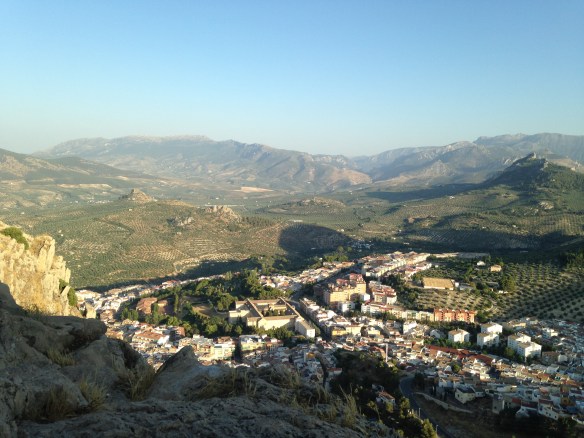 Jaén was definitely the most disenchanting city I visited. However, away from the tourist crowds, it gives you a taster of what life can really be like in Andalucía.
 La Buena Vida
1 thought on “Jaén”