I wouldn’t be surprised if you haven’t heard of this place – I hadn’t either.
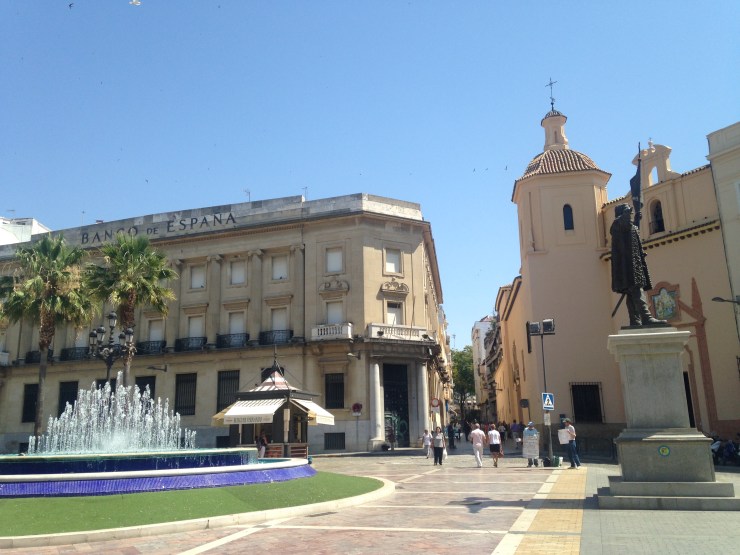
Huelva, Andalucía’s most Western city, lies just before the Portuguese border. It is often overshadowed by the region’s capital, Sevilla, which really winds up the locals.
PRIDE
The people of Huelva are known as onubenses (after the city’s old name: Ónuba) and are extremely proud of their province. In retaliation to the showiness of their Sevilla neighbours, the locals are very defensive of their territory. For example, they were horrified to find that the Lonely Planet Guide Book had grouped the Huelva and Sevilla provinces together. The sense of pride within Andalucía’s different provinces is extremely strong: each sees itself as separate (and superior) to the rest of the region.
THE CITY
Despite being dwarfed in the face of Sevilla, Huelva actually has a lot to offer. The town itself isn’t the prettiest as most of it was destroyed in the tragic Lisbon earthquake. (1755) However, it still has its own unique aspects:
The industrial port area, which recently underwent a huge renovation, is now a lovely place to eat, relax and watch the sunset.
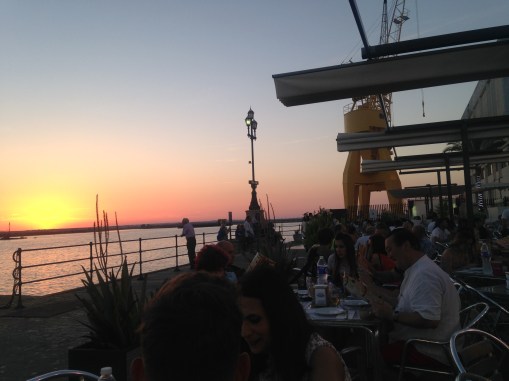
The port includes an impressive restored iron bridge with boardwalks on different levels. The bridge dates back to the region’s mining era when it was used to transport minerals from inland on to ships.


On a hilltop above the city you can find the Mandala Bar which offers great evening views.


FOOD
Onubenses are particularly proud of their food (apparently boasting the best jamón in the whole of Andalucía.) As the city lies between the estuaries of two rivers, seafood is their speciality. I tried the famous fresh prawns, adobo and fried cuttlefish, known as choco frito.
Inland, you can find delicious dishes including wild mushrooms, another regional specialty, and rabo de toro, stewed bull’s tail.


HISTORY
Huelva also has a very interesting history: Christopher Columbus set sail from here on his journey of discovery. However, the most fascinating is the province’s mining past.
In the 1870s, the English settled here and began an extensive mining industry; establishing the Rio Tinto Company. (Named after the Río Tinto river that flows through the province.)
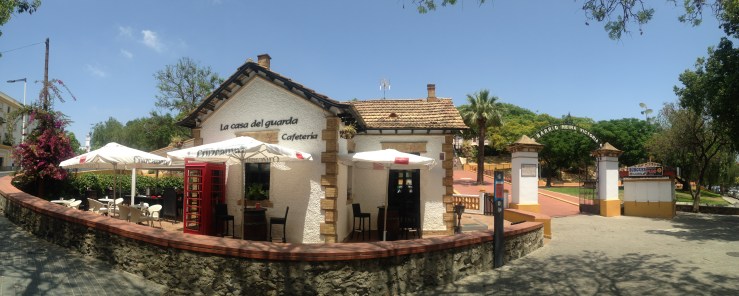
A British influence can still be felt in Huelva today. The city’s El Barrio Reina Victoria, the neighbourhood of Queen Victoria, has typically English style houses, which are still lived in. The area also comes with its very own red telephone box.
 About one hour’s drive from Huelva city, you can find Las Minas de Rio Tinto, or the Río Tinto Mines. This is one of the world’s oldest mining areas and from 1870 onwards, the British exploited the land here for all it was worth. In the 1950s the Spanish regained control of the area and some mines are still active to this day.
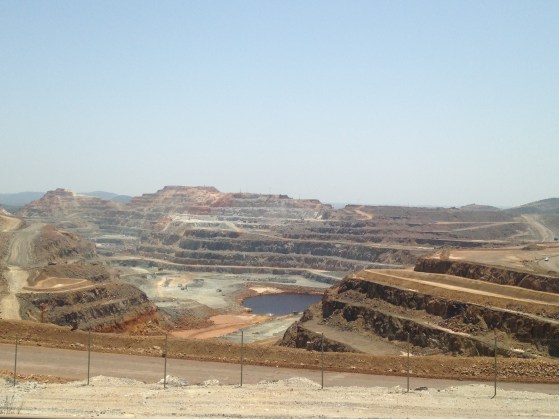 The intense mining of the area has resulted in the removal of huge chunks of the land as the soil was stripped of its rich quantities of iron and copper. The abundance of minerals mean the land is stained a dusty red, also dying the water a bloodlike colour. (Tinto, like red wine, literally means dark red.)


The landscape of Rio Tinto is very striking. The abandoned mines are eerily quiet and their spooky, alien features make you feel like you are on an another planet.
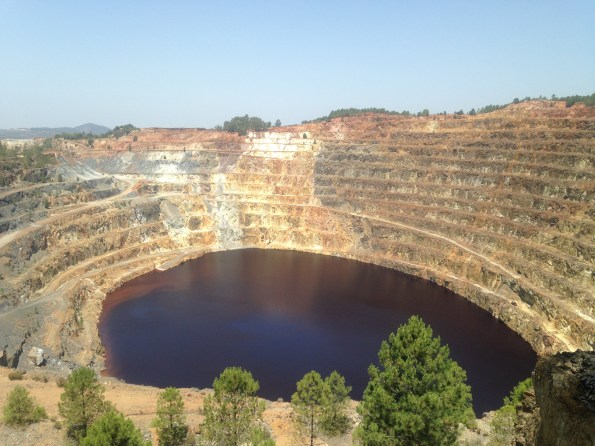 The Rio Tinto Mining Park is well worth a visit: it offers a museum, a recreated Victorian house and a train ride around the mines themselves.
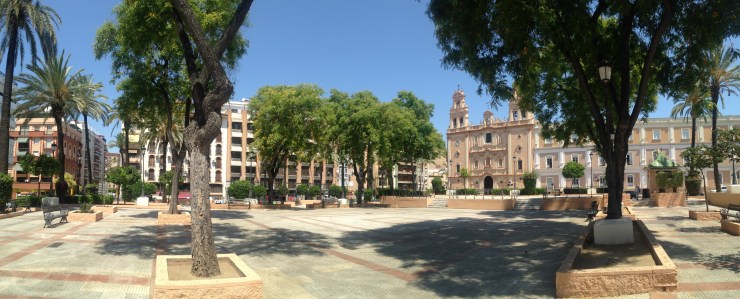
So, despite being relatively unassuming, Huelva has its own distinct character that should not be overlooked.
Moreover, the province is home to a stunning natural park, La Sierra de Aracena, which is covered in my next post…
 La Buena Vida
1 thought on “Huelva”